


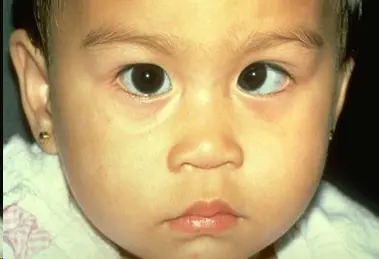
Also known as lazy eye, is a condition where vision did not develop normally during early childhood. Though commonly known as ‘lazy eye’, it should not be confused with squints (a misalignment of the eye).
Strabismus is the most common underlying cause of amblyopia.
In early childhood, due to certain causes (see below), if a child’s brain has not received clear images from the weak eye/s, vision will not develop normally in that eye/s. The eye/s is then said to be "amblyopic" or "lazy".


After about 7- 8 years old, the development of the part of a child's brain that processes vision is almost complete. This means that the critical time period to treat amblyopia is before this age, otherwise, visual impairment can become permanent.
Common causes of amblyopia

- High refractive errors (short-sightedness /myopia, longsightedness/ hyperopia or astigmatism) or a large difference in the degree/ refractive power between both eyes
- Strabismus/ squint: a misalignment of the eyes
- Deprivational: Any condition that obstructs vision from a young age (e.g. a droopy eyelid, childhood cataract)
How do I know if my child has a lazy eye?

Diagnosis
Treatment