Are there any treatments available to control Childhood Myopia?
Correcting myopia is important for normal visual development and this can be
achieved with the use of glasses. However, specialised treatments are now available
to control the rate of myopia progression which can be rapid, especially in younger
children. This is important as high myopia associated with excessive eyeball
elongation can increase risks of developing sight-threatening conditions (such as
retinal detachment and glaucoma) in adulthood, despite having laser corrective
vision procedures.
These treatment options all work by reducing the rate of eyeball elongation:
Specialised glasses
That use special lenses to provide clear central vision while creating a
peripheral defocus by subtly altering peripheral vision. This peripheral
defocus slows down the eyeball's elongation.
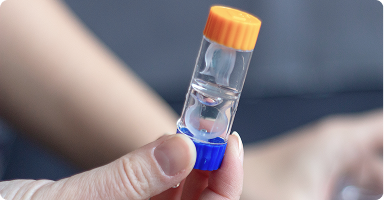
Soft daytime dual focus contact lenses
These are daily disposable contact lenses that feature distinct optical
zones that correct day-to-day vision while actively sending signals to the
eye to slow down its growth rate. Again, its use is advised only in older
children.
Lifestyle changes
In addition, children should be encouraged to practice healthy eye habits
(*the 20-20-20 Rule) and to spend at least 2 hours a day outdoors in
daylight.
Orthokeratology lenses
Rigid contact lenses that are worn while sleeping and reshape the cornea
overnight. This simultaneously slows down eye growth and allows for clear
vision in the day, though its use is limited in younger children and is only
appropriate for older children with strict hygiene habits.
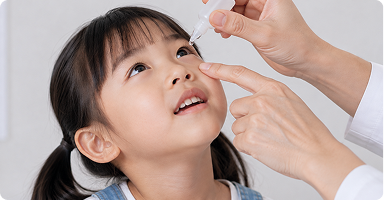
Low-Dose Atropine Eye Drops
These eyedrops are usually applied once a night and are prescribed and
supervised by an eye specialist, have been shown to be highly effective in
slowing myopia progression.

Every 20 minutes spent looking at a screen or book, have your child look at something 20 feet away for at least 20 seconds